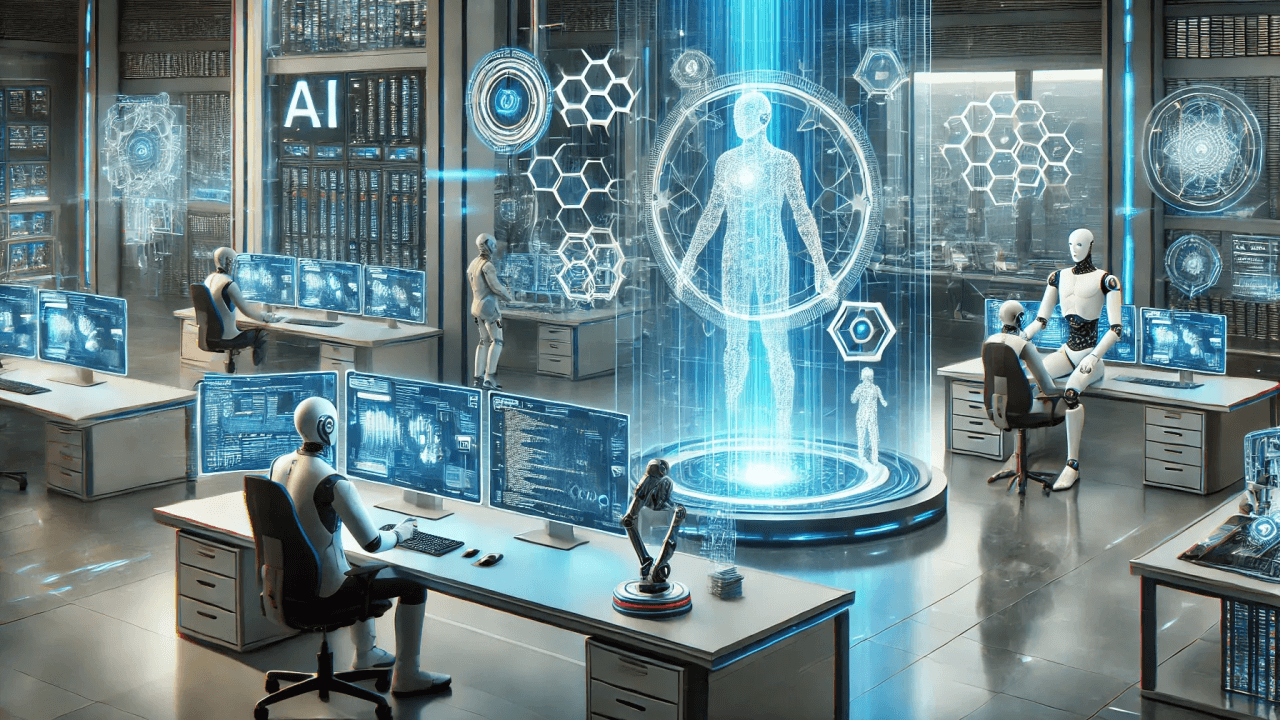
Bill Gates recently shared his thoughts on how AI is reshaping the workforce, and his message was clear: automation will replace many jobs, but a few careers remain safe—for now. If you’re wondering where to focus your skills in this AI-dominated era, here’s what you need to know.
The AI Disruption: A Ticking Clock for Many Jobs
AI is evolving at an unprecedented pace, automating routine tasks and reducing the need for human intervention in many industries. Gates believes this shift is inevitable, predicting that AI will fundamentally change the way we work, leading to fewer traditional jobs and possibly even a 3-day workweek.
However, some professions will resist automation due to their complexity, creativity, or critical decision-making requirements. According to Gates, three fields are still relatively AI-proof:
1. Coders – The Creators Behind AI
It might seem ironic, but Gates argues that coders will continue to thrive despite AI’s growing ability to generate code. While AI can automate programming tasks, human expertise is needed to:
- Debug and refine AI-generated code
- Design and optimize complex systems
- Push AI development forward
AI doesn’t innovate by itself—it builds on what humans create. So, software engineers and AI specialists will remain in high demand, ensuring that AI continues to evolve in the right direction.
2. Energy Experts – Managing the World’s Power
The energy sector, whether it’s nuclear power, renewable energy, or grid management, is far too complex and high-stakes for AI to handle alone. Gates highlights that human oversight is crucial in this field because:
- Energy systems involve high-risk decision-making that requires ethical and regulatory considerations.
- Infrastructure failures can lead to catastrophic consequences—human expertise is required to mitigate risks.
- AI can assist with efficiency, but strategic long-term planning still relies on human experts.
Simply put, the world’s energy supply is too critical to be left entirely to machines.
3. Biologists – The Innovators in Science
AI has already demonstrated its power in diagnosing diseases and analyzing DNA, but Gates believes biologists will always be needed because:
- AI analyzes data but doesn’t innovate—scientific breakthroughs still require human creativity.
- Biology involves unpredictable variables that AI cannot fully comprehend.
- Ethical and medical research demands human intuition and decision-making.
While AI will assist in areas like drug discovery, biologists will continue to lead in scientific research and medical advancements.
What This Means for the Future of Work
The AI revolution is not a distant future—it’s happening now. Jobs that involve repetitive tasks or predictable processes are at high risk of automation. Meanwhile, fields that require creativity, critical thinking, and ethical decision-making will remain human-led for longer.
The takeaway? If you’re in a field vulnerable to AI replacement, now is the time to adapt, upskill, and embrace AI as a tool rather than fear it as a competitor.
Are You in One of These ‘Safe’ Jobs?
While coders, energy experts, and biologists are currently AI-resistant, the reality is that no job is completely immune to automation in the long run. AI is evolving rapidly, and those who learn to work alongside AI will have the best career prospects.
So, what’s your take? Do you think these predictions will hold up, or will AI eventually take over even these fields? Let’s discuss in the comments!