Before an AI voice agent says a single word, the person receiving the call has already made a decision: answer, ignore, or reject. That decision is driven almost entirely by what shows up on their screen – the caller ID. A well-built voice agent with excellent conversation quality still fails if the call never gets answered in the first place, and caller ID is one of the biggest levers determining whether it does.
This guide covers what caller ID actually involves for an AI voice agent, why it affects pickup rates so directly, and what to configure and monitor to keep it working in production.
What Is Caller ID, in the Context of a Voice Agent?
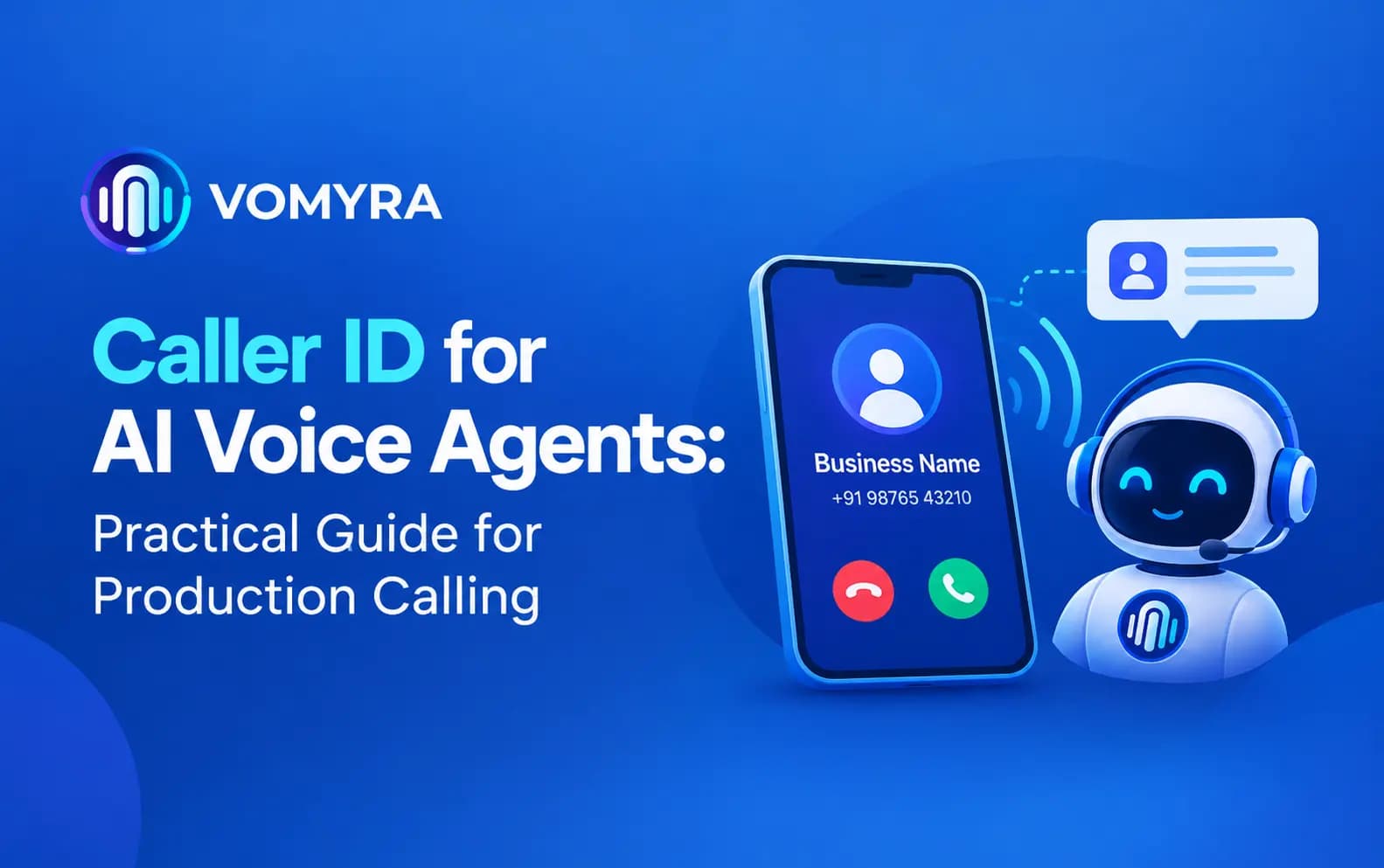
Caller ID is the phone number and, where supported, the name or label that appears on a recipient’s phone when a call comes in. For an AI voice agent making outbound calls, caller ID is configured as part of the calling setup – determined by the number the platform uses to place the call, and in some cases, a registered business name associated with it.
This single piece of information shapes the recipient’s very first impression, before any conversation happens: is this a number they recognise, a local number, or something that looks unfamiliar, foreign, or potentially spam?
Why Caller ID Has an Outsized Effect on Pickup Rates
First Impressions Happen Before the Call Connects
Unlike an email, where the subject line and sender name are seen together with some context, a phone call offers almost nothing beyond the number itself in the moment a decision to answer is made. That makes caller ID disproportionately influential compared to most other trust signals in digital communication.
Local Numbers Signal Familiarity
A call from a recognisable local mobile number format tends to be treated very differently from a call showing an unfamiliar international format, a landline-style number, or a number with no local context. In markets where mobile-first communication dominates, including India, this distinction shows up clearly in pickup behaviour.
Spam and Scam Flagging
Carriers and phone operating systems increasingly flag numbers associated with high call volume, spam complaints, or suspicious patterns. A number that gets flagged this way sees pickup rates drop sharply, regardless of how legitimate the actual business calling is.
Consistency Builds Recognition Over Time
A business that calls consistently from the same number, used responsibly, can build familiarity with repeat contacts over time – something that resets to zero every time a business rotates through generic or shared numbers.
Read Also: Tool Calling for AI Voice Agents: Practical Guide for Production Calling
What Affects Caller ID Performance for an AI Voice Agent
Number type and format Local mobile virtual numbers generally perform better for pickup than generic VoIP numbers or numbers in unfamiliar formats, particularly for a mobile-first calling audience.
Number reputation Every number accumulates a reputation over time based on call volume, how recipients interact with it (answered, rejected, blocked, reported), and calling patterns. A poorly managed number can develop a bad reputation even if properly provisioned to begin with.
Business name display (where supported) Some carriers and regions support displaying a registered business name alongside or instead of the number. Where available, this adds a further layer of trust beyond the number alone.
Calling volume and pacing Placing an unusually high volume of calls from a single number in a short period can trigger spam-detection systems, even when every call is legitimate – pacing matters as much as the number itself.
Consistency of use Using the same number consistently for a specific type of outreach, rather than rotating through numbers unpredictably, tends to support better long-term recognition and reputation.
Common Caller ID Problems and What They Usually Mean
| Symptom | Likely Cause |
| Low pickup rates despite good call timing | Number appears unfamiliar or foreign to the recipient |
| Pickup rates decline over the course of a campaign | Number reputation degrading from calling volume or patterns |
| Calls show as “Spam Likely” or similar on recipient’s phone | Carrier-level flagging, often from volume or complaint patterns |
| Recipients report the call “looked suspicious” | Number format or lack of local context undermining trust |
| Inconsistent pickup rates across different regions | Uneven local number coverage or carrier relationships by region |
This is a useful starting point for diagnosing pickup issues that trace back to caller ID rather than the AI conversation itself – a distinction worth making early, since no amount of script or voice quality improvement fixes a caller ID problem.
Best Practices for Managing Caller ID in Production Calling
Use local number formats for local audiences For calling within India, using numbers in familiar local mobile formats tends to outperform generic or international alternatives for pickup rates.
Monitor number reputation actively Track pickup and rejection rates by number over time, and be ready to rotate or retire numbers that show signs of degraded reputation rather than continuing to use them indiscriminately.
Pace outbound calling volume sensibly Spreading call volume appropriately, rather than placing an extreme burst of calls from a single number in a short window, helps avoid triggering spam-detection thresholds.
Register business caller ID where supported In regions and with carriers that support verified business caller ID display, registering this adds a meaningful trust signal beyond the number alone.
Keep numbers dedicated to consistent use cases Using a stable, dedicated number for a specific type of outreach – rather than mixing many unrelated use cases through the same number – helps build recognisable calling patterns over time.
Respect consent and calling regulations Caller ID practices exist alongside broader outbound calling regulations and consent requirements, which vary by region and should be factored into number usage and calling policy.

Caller ID Built to Actually Get Answered
An AI voice agent’s conversation quality only matters once the call is picked up – and caller ID is one of the clearest levers determining whether that happens at all. Getting this right means more than provisioning a number; it means monitoring reputation, pacing calls sensibly, and using number formats that make sense for the audience being called.
Vomyra is India’s Agentic Voice AI Platform, built with real Indian mobile numbers – 98 and 94 series – designed specifically for the pickup and trust behaviour of Indian callers, with number performance managed as part of the platform rather than left to chance. Businesses can launch complete AI voice agents – Research, Outreach, Qualification, Closing and Follow-Up – calling from numbers built to actually get answered.
If you’re evaluating a voice AI platform for production calling in India, it’s worth checking how its numbers perform against your own audience.
FAQs
Does caller ID matter as much for inbound as outbound calls?
Caller ID primarily affects outbound calling, since it determines whether a recipient chooses to answer. For inbound calls, the more relevant caller ID consideration is ensuring the number the business publishes is consistent and recognisable to callers trying to reach them, including for call-backs.
Can a good caller ID guarantee high pickup rates?
No single factor guarantees pickup rates – caller ID is one significant factor among others, including call timing, prior relationship with the recipient, and general calling patterns.
How quickly can a number’s reputation degrade?
This varies, but high call volume, especially with poor pacing or a high proportion of unanswered or rejected calls, can degrade a number’s standing relatively quickly – ongoing monitoring is more reliable than assuming reputation stays fixed.
Is it better to use one number or rotate through several for outbound campaigns?
This depends on volume and use case – very high-volume campaigns sometimes use a managed pool of numbers to distribute load and protect reputation, while lower-volume, relationship-based outreach often benefits from a single, consistent number recipients can come to recognise.