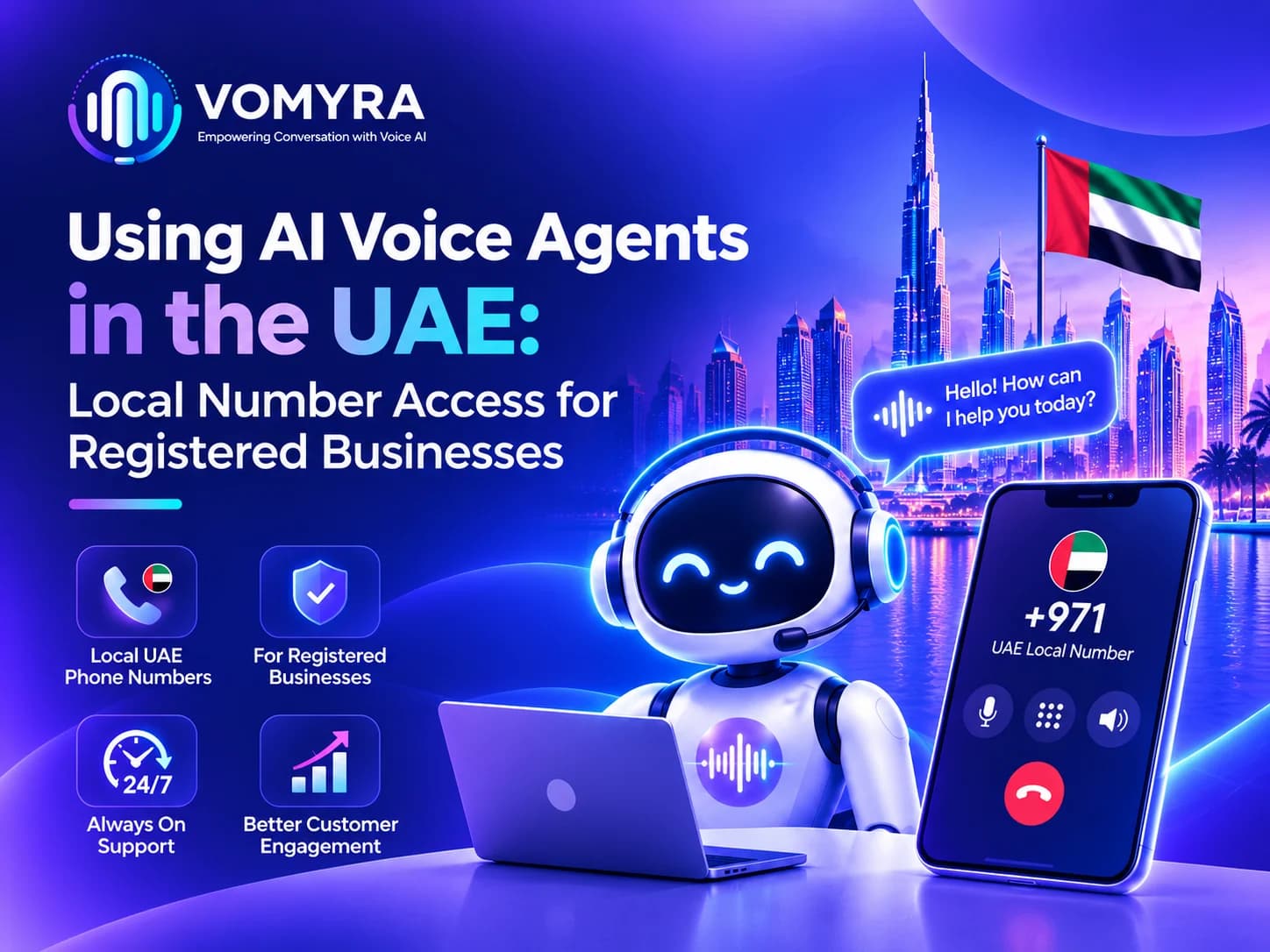
For a business in Dubai, Abu Dhabi or Sharjah, a voice agent that can place calls is useful. A voice agent that can place calls from a local UAE number is far more useful, because customers are more likely to answer and trust it.
But local numbers are not like email addresses. In the UAE, telecom services are regulated, and access to local numbers is generally tied to who you are as a business. That is why this topic matters most for registered businesses: companies that can show they are legitimate, licensed and accountable.
This guide explains how AI voice agents in the UAE work with local numbers, what your company should prepare, how verification usually works and how to move from plan to first call. It is a planning guide, not legal advice. Rules and provider requirements change, so confirm every point with your telecom provider and a legal adviser.
Why Local Number Access Matters
Customers Answer Local Numbers
People tend to pick up calls from numbers that look local and ignore unknown international ones.
Local Numbers Build Trust
A UAE number tells customers you are established in the country, which matters in property, healthcare, finance, hospitality and services.
Callbacks Become Easy
Customers can return a missed call without confusion or extra cost, and your team or agent can handle it.
Compliance Starts With the Number
How a number is obtained, who it is registered to and how it is used for outbound calling all affect whether calls connect and whether you stay on the right side of the rules.
Why Registration Is the Key Requirement
Access to local numbers for AI voice agents is typically meant for businesses that can be identified and held accountable for how they use the line. In practice, providers usually want to know:
- Who the business is.
- That it is legally registered and active.
- Who is authorised to request and manage the number.
- What the number will be used for.
This protects customers from spam and impersonation, and it protects legitimate businesses from being mixed up with bad actors. It also means that individuals, unregistered operators and businesses without clear documentation may find access harder or slower.
What Your Business Should Prepare
Requirements vary by provider and number type, so ask for the full list at the start. Commonly requested items include:
Business Registration Documents
A valid trade licence or equivalent registration for your company, matching the name and activity you will use on calls.
Authorised Signatory Details
The name and identification of the person who can sign for the company and request numbers.
Company Information
Registered address, contact details and a clear description of your business activity.
Intended Use of the Number
Whether you plan inbound calling, outbound calling or both, and for what purposes, such as appointment reminders, order confirmation or lead follow-up.
Any Sector-Specific Approvals
Regulated sectors such as finance, healthcare and insurance may need extra approvals or have stricter rules on what can be said or recorded.
How Business Verification Usually Works
Business verification is the process of checking that your company is real, eligible and responsible for the number. A typical flow looks like this:
Step 1: Choose a Licensed Route
Start with a provider that is licensed to supply UAE numbers and route calls. Avoid unclear or unlicensed routes.
Step 2: Submit Documents
Provide the registration documents, signatory details and intended use as requested.
Step 3: Review and Approval
Business verification continues as the provider reviews the application. This can take time, particularly if documents are incomplete or details do not match.
Step 4: Number Assignment and Setup
Once approved, the number is assigned and configured for inbound, outbound or both.
Step 5: Connect to Your AI Voice Agent Platform
The number is linked to your voice platform, so the agent can place and receive calls through it.
Step 6: Test Before Scaling
Run a small number of test calls, check how the caller ID appears, and confirm callbacks reach the right place.
Readiness Checklist
| Area | Question to answer |
| Registration | Is our trade licence valid and does the activity match how we use the number? |
| Signatory | Who is authorised to request and manage the number? |
| Use case | Is the call inbound, outbound or both, and what for? |
| Provider | Which licensed provider will supply and route the number? |
| Caller ID | Do we control the number shown to customers? |
| Consent | How do we tell customers about automated calls and recording? |
| Data | Where are recordings and transcripts stored, and for how long? |
| Opt-outs | How do we honour do-not-call and opt-out requests? |
| Languages | Which languages will the agent use, and has it been tested with native speakers? |
| Handoff | When and how does the agent pass calls to a person? |
| Legal review | Who signs off after advice? |
What AI Voice Agents in the UAE Can Do
An AI voice agent platform turns a verified number into working conversations.
Once access is in place, they can support a wide range of everyday communication.
Sales and Lead Follow-Up
Call new enquiries quickly, qualify them by budget, timeline and location, and book viewings or meetings.
Appointment Management
Confirm, remind and reschedule appointments in clinics, salons, service centres and professional offices.
Order and Delivery Confirmation
Confirm addresses, delivery slots and cash-on-delivery orders to reduce failed deliveries.
Payment and Renewal Reminders
Send polite reminders for invoices, instalments and renewals.
Customer Support
Answer common questions, check status and log tickets, with a handoff to a person for complex cases.
Feedback and Surveys
Collect short, structured feedback after service or purchase.
Languages and Culture
The UAE is multilingual. A single day of calls can include Arabic, English, Hindi, Urdu, Malayalam, Tagalog and more, often mixed within a sentence.
- Offer the opening line in a language most customers understand, and let the agent follow the caller’s choice.
- Test Arabic carefully, including Gulf dialect and Arabic-English mixing.
- Check names, places and numbers for correct recognition and pronunciation.
- Choose calling times with working hours, weekends and local holidays in mind.
Read More: UAE Local Number Calling for AI Voice Agents: Business Requirements Explained
Best Practices
Whichever AI voice agent platform you choose, these habits keep your setup safe.
Start With One Use Case
Choose a focused starting point, such as appointment reminders or lead follow-up, and measure the result.
Keep Everything Documented
Store your registration, approvals, scripts and consent wording in one place, so audits and provider checks are simple.
Be Transparent
Tell customers when they are speaking with an AI voice agent where required, and always offer a route to a person.
Respect Consent and Calling Rules
Call only people who have reason to expect it, follow calling-hour and do-not-call rules and honour opt-outs at once.
Review Calls Regularly
Read transcripts weekly in the first month, fix errors and refine scripts.

Plan Your UAE Voice Setup With Confidence
Access works best when your documents are ready, your use case is clear and your compliance questions are answered early.
Vomyra gives businesses a complete AI voice team (Research, Outreach, Qualification, Closing and Follow-Up agents) with human-like conversations in multiple languages and no-code setup. If you are a registered business planning calls to UAE customers, book a demo, share your use case and ask what is possible for your region.
FAQs
Can registered businesses use AI voice agents in the UAE?
Yes, businesses can use voice AI for customer communication. How they do it, especially which numbers they use and how calls are routed, should follow the rules of licensed providers and the telecom regulator.
Why do registered businesses get local number access more easily?
Providers usually need to know who is responsible for a number. A registered business can show it is legitimate and accountable, which helps with verification and protects customers from misuse.
Do I need a trade licence for local number access?
Providers typically ask for a valid trade licence or similar registration, along with signatory details, but requirements vary by provider and number type. Ask for the exact list before you apply.
What is business verification?
It is the process of checking that your company is real, eligible and responsible for the number. It usually involves reviewing your registration documents, authorised signatory and intended use of the line.
How long does getting a local number take?
It depends on the provider, the number type and how complete your documents are. Clear, matching documents and a defined use case usually make the process faster.
Can an AI voice agent use my local number for outbound calls?
That depends on your provider, number type and the current rules on automated and commercial calls. Confirm this in writing with your provider and take legal advice before launching outbound campaigns.
Which languages should the agent speak?
Start with Arabic and English, then add other languages your customers actually use. Test each language with native speakers on real phone lines.
How do I choose an AI voice agent platform for the UAE?
Look for natural conversation in your customers’ languages, number connection options, CRM integration, call transcripts, clear handoff rules and compliance support. Test it on your own calls.
Does Vomyra support UAE local numbers?
Vomyra is India’s Agentic Voice AI Platform, built around real Indian mobile numbers, with human-like conversations in multiple languages. For UAE numbers, ask the Vomyra team what is currently supported and what you need to arrange with a licensed provider.