Introduction
The hospitality industry in India is experiencing a significant shift in how guest communication is managed. Hotels, resorts, and hospitality brands are increasingly adopting artificial intelligence to improve operational efficiency, reduce repetitive workloads, and enhance guest engagement. As customer expectations continue to evolve, immediate access to information has become a critical factor influencing booking decisions and overall guest satisfaction.
Traditionally, hotel front desk teams handled a large volume of calls related to room availability, pricing, amenities, check-in policies, transportation services, and reservation requests. While these inquiries are essential to the booking process, they often consume substantial staff time and create operational bottlenecks during peak periods. AI voice automation is emerging as a practical solution to address these challenges by automating routine conversations and enabling hotel staff to focus on higher-value guest interactions.
The Growing Volume of Booking-Related Hotel Calls
Hotels receive hundreds of inquiries every week from prospective guests seeking information before making a reservation. These inquiries are often repetitive in nature and involve similar questions regarding accommodation options, pricing structures, facility availability, and booking policies.
During holiday seasons, destination wedding periods, long weekends, and peak tourism months, call volumes can increase dramatically. Front desk teams are frequently required to answer identical questions throughout the day, limiting their ability to focus on guest service and operational responsibilities.
High inquiry volumes can also lead to longer response times, missed calls, and inconsistent communication. In a competitive hospitality environment, delayed responses may result in potential guests choosing alternative properties that provide faster assistance.
Understanding AI Voice Automation in Hospitality
AI voice automation refers to the use of artificial intelligence-powered voice agents capable of handling inbound guest calls through natural language conversations. Unlike traditional IVR systems that require callers to navigate through predefined menus, AI voice agents understand spoken requests and provide contextually relevant responses in real time.
These systems are designed to answer frequently asked questions, provide reservation-related information, collect guest details, qualify booking inquiries, and transfer complex conversations to hotel staff when necessary. Advanced AI platforms can also integrate with reservation systems, customer relationship management software, and property management systems to deliver accurate and up-to-date information.
The adoption of AI voice automation enables hotels to create a more responsive communication environment while significantly reducing manual call-handling requirements.
Why Hotels Were Receiving High Volumes of Repetitive Calls
A substantial percentage of hotel inquiries involve information that remains relatively consistent and can be delivered automatically without requiring human intervention. Common call categories include room availability checks, pricing inquiries, hotel facility information, check-in procedures, location details, and cancellation policies.
Many guests prefer obtaining this information through a phone conversation before completing a reservation. As a result, front desk teams spend a significant portion of their workday answering repetitive questions that do not necessarily require specialized expertise.
By identifying these recurring inquiry categories, hotels have been able to implement AI-powered solutions capable of managing a large portion of inbound communication independently.
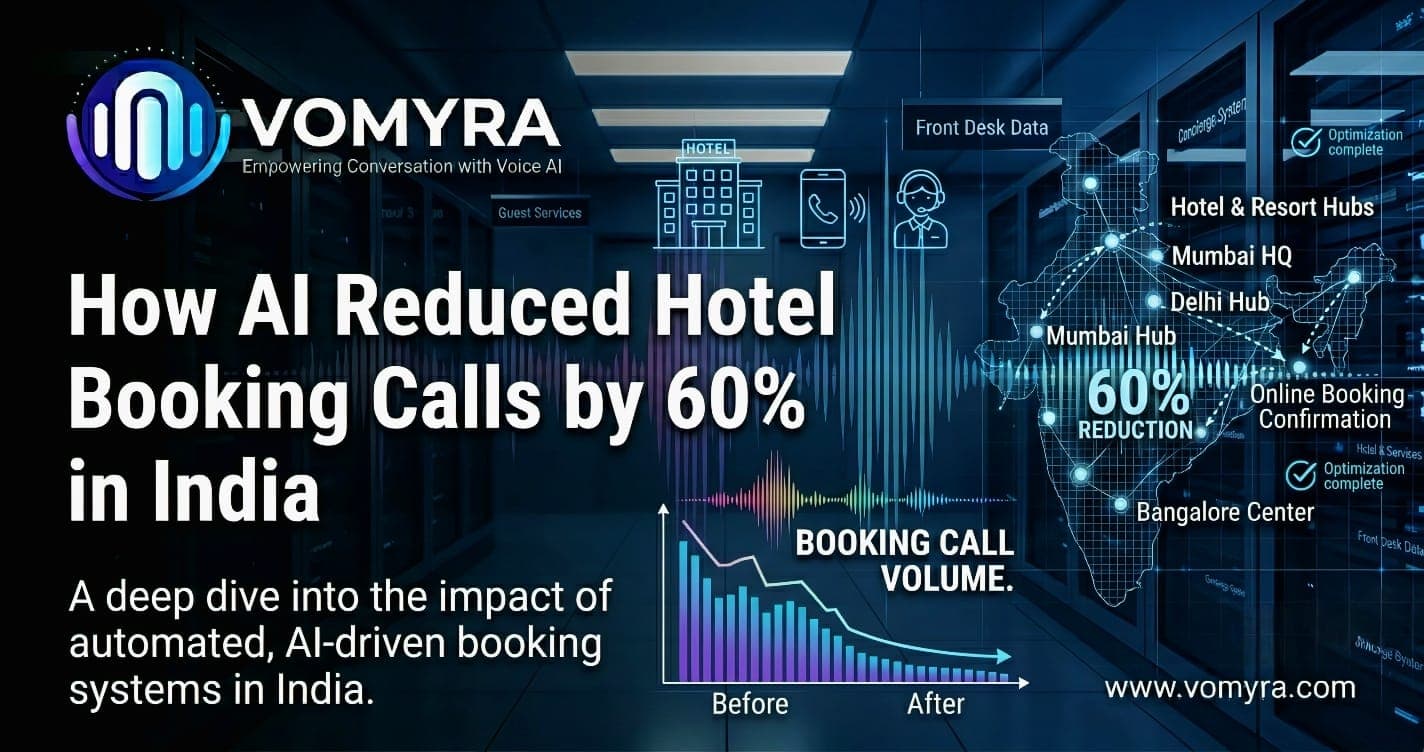
How AI Reduced Booking-Related Calls by Up to 60%
The reduction in booking-related calls reaching hotel staff primarily results from the automation of routine guest interactions. AI voice agents can instantly answer common questions, provide booking information, and guide callers through the inquiry process without requiring assistance from a receptionist.
Industry observations indicate that room availability requests, pricing inquiries, facility-related questions, and policy clarifications account for a substantial share of inbound calls. Once these conversations are handled automatically, only complex requests or special situations require human involvement.
As AI systems continue to manage repetitive inquiries efficiently, front desk teams experience a significant decrease in call volumes, allowing them to allocate more time to guest service and operational activities.
| Inquiry Type | Approximate Share of Calls |
| Room Availability | 25% |
| Room Rates & Pricing | 20% |
| Hotel Facilities | 15% |
| Check-In Policies | 10% |
| Directions & Location | 10% |
| General Questions | 20% |
Because many of these inquiries follow predictable patterns, they can be automated successfully through conversational AI technology.
Operational Benefits of AI Voice Automation
Reducing booking-related calls provides measurable operational advantages for hospitality businesses. Staff members spend less time managing repetitive conversations and more time focusing on guest satisfaction, reservations management, service delivery, and problem resolution.
AI-powered call handling also improves communication consistency by ensuring that every guest receives accurate information regardless of staffing levels or time of day. This standardization reduces the likelihood of misinformation while improving the overall quality of customer interactions.
Additional operational benefits include reduced front desk workload, improved resource utilization, faster response times, lower call abandonment rates, and greater scalability during periods of increased demand.
Improving Guest Experience Through Instant Responses
Response speed plays a critical role in shaping guest perceptions and influencing booking decisions. Travelers increasingly expect immediate access to information, particularly when comparing multiple accommodation options.
AI voice automation ensures that every inquiry receives an instant response without requiring guests to wait in queues or remain on hold. Information regarding room categories, pricing, amenities, dining options, transportation services, and booking procedures can be delivered immediately.
This level of responsiveness contributes to a more professional guest experience while increasing confidence in the hotel’s ability to provide efficient service.
Impact on Direct Booking Performance
Direct bookings remain a strategic priority for hotels seeking to improve profitability and reduce reliance on commission-based booking channels. Faster communication and improved inquiry management can significantly influence booking conversion rates.
AI voice automation supports direct booking growth by ensuring that every inquiry is addressed promptly. Prospective guests receive the information required to make informed decisions, while hotels benefit from increased lead capture and improved conversion opportunities.
By reducing communication delays and eliminating missed calls, hotels can strengthen direct booking channels and establish stronger relationships with prospective guests.
Supporting Hospitality Teams During Peak Seasons
Seasonal demand fluctuations often create operational challenges for hospitality businesses. Festivals, vacation periods, conferences, weddings, and holiday weekends can generate sudden increases in guest inquiries that exceed the capacity of front desk teams.
AI voice automation provides a scalable solution capable of handling multiple conversations simultaneously without affecting service quality. Unlike traditional call handling processes, AI systems maintain consistent performance regardless of inquiry volume.
This scalability enables hotels and resorts to maintain high communication standards during peak periods while avoiding the need for temporary staffing increases.
Key Features Hotels Should Consider
Hotels evaluating AI voice automation platforms should prioritize solutions that offer natural conversational capabilities, multilingual communication, reservation support, and seamless software integrations.
Important features include:
- Natural language understanding
- 24/7 call handling
- Reservation inquiry management
- PMS integration
- CRM integration
- Lead capture automation
- Analytics and reporting
- Human call escalation
- Multi-language support
- Real-time information access
Platforms such as Vomyra Voice AI Agent provide hospitality businesses with advanced voice automation capabilities designed to improve communication efficiency while maintaining a professional guest experience.
The Future of AI Voice Automation in Hospitality

Artificial intelligence is expected to play an increasingly important role in hospitality operations over the coming years. Hotels are moving toward automated communication systems capable of supporting reservations, guest engagement, loyalty programs, service requests, and personalized recommendations.
Future AI voice systems will likely offer deeper integration with hotel management platforms, advanced personalization features, predictive guest support, and expanded multilingual capabilities. These developments will enable hospitality businesses to deliver more efficient and scalable guest experiences while controlling operational costs.
Solutions such as Vomyra Voice AI Agent are helping hotels modernize guest communication strategies and prepare for the next phase of hospitality technology adoption.
Conclusion
AI voice automation is transforming hotel communication across India by reducing repetitive booking-related calls and improving operational efficiency. By automating routine inquiries related to room availability, pricing, facilities, and reservation policies, hotels can reduce front desk workloads while delivering faster and more consistent guest support.
The ability to provide immediate responses, operate continuously, manage high inquiry volumes, and support direct booking initiatives makes AI voice automation a valuable investment for modern hospitality businesses. As technology adoption continues to increase, AI-powered communication systems are expected to become a standard component of hotel operations throughout the industry.
Frequently Asked Questions
What is AI voice automation for hospitality?
AI voice automation is a technology that enables hotels and resorts to automate guest phone conversations, booking inquiries, reservation requests, and customer support interactions using artificial intelligence-powered voice agents.
How does AI reduce hotel booking-related calls?
AI automates repetitive inquiries related to room availability, pricing, hotel facilities, check-in policies, and reservation information, reducing the number of calls that require direct staff involvement.
Can AI voice systems operate 24/7?
Yes. AI voice agents can answer calls continuously throughout the day, including weekends, holidays, and non-business hours, ensuring uninterrupted guest support.
Do AI voice automation platforms support multiple languages?
Most modern hospitality AI platforms support English, Hindi, and several regional Indian languages, enabling hotels to communicate effectively with a diverse guest base.
Is AI voice automation suitable for small hotels and resorts?
Yes. AI voice automation can benefit independent hotels, boutique properties, resorts, and large hospitality chains by improving efficiency, reducing staff workload, and enhancing guest communication.