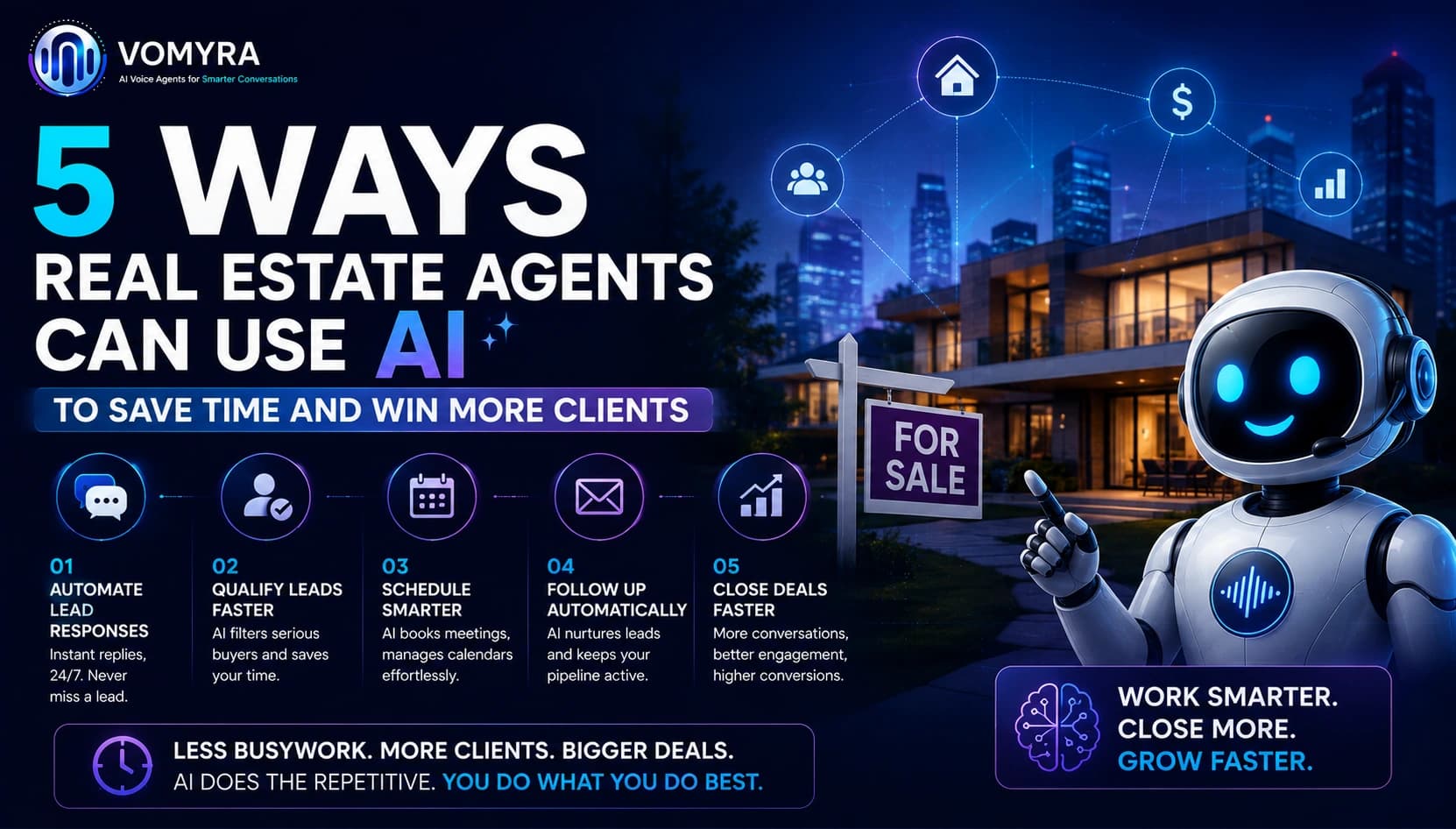
Real estate has always been a people business, but the agents pulling ahead in 2026 aren’t just better at building relationships, they’re better at using technology to protect their time for the relationships that actually matter. AI for real estate agents isn’t about replacing the human touch. It’s about clearing out the repetitive, time-draining tasks so agents can focus on showings, negotiations, and closing deals.
If you’ve been wondering where AI actually fits into your day-to-day work as an agent, here are five practical, proven ways it’s already being used, and why so many agents are adopting it faster than expected. You can also see how similar automation works for AI voice calling in other service industries if you want a broader picture of how this technology is being applied beyond real estate.
1. Automated Lead Qualification
Not every lead that fills out a form or calls your office is ready to buy or sell right away. Sorting genuinely serious buyers from casual browsers used to eat up hours of an agent’s week.
AI-powered lead qualification tools now handle this automatically. They ask the right questions, gauge intent, check budget readiness, and flag which leads are worth an agent’s immediate attention. Instead of chasing every inquiry manually, agents get a filtered list of people who are actually ready to move forward.
This alone is one of the biggest time-savers for busy agents, especially those juggling multiple listings and client calls at once.
2. 24/7 Chatbots and Voice Assistants for Instant Communication
Buyers don’t only browse listings during office hours. A huge number of inquiries come in late at night, early morning, or on weekends, exactly when most agents are unavailable.
This is where AI chatbots and voice assistants make a real difference. Chatbots can answer common buyer questions instantly on a website, things like pricing, availability, or neighborhood details, without making the visitor wait for a callback.
Voice assistants take this a step further by handling actual phone calls. They can qualify late-night callers, answer questions about a property, and even book showing appointments directly into an agent’s calendar, all without human involvement. For agents dealing with a high volume of calls, this kind of AI voice agent for real estate setup means no lead ever goes cold simply because nobody was available to pick up the phone.
3. Lead Scoring That Predicts Buyer Readiness
Not all leads deserve equal attention, and figuring out who’s most likely to buy soon versus who’s still months away from deciding used to rely heavily on gut feeling.
AI lead scoring changes this by analyzing behavior patterns, browsing activity, response times, and engagement history to predict which buyers are genuinely close to making a decision. Agents can then prioritize their outreach based on actual data instead of guesswork.
This helps agents spend their limited time where it counts most, following up with people who are realistically ready to move, rather than spreading effort evenly across every lead regardless of intent. If you want to explore how automated call handling supports this kind of prioritization in practice, this guide on how missed calls quietly cost businesses revenue breaks down why fast, smart follow-up matters so much.
4. AI-Generated Listing Descriptions and Social Media Content
Writing fresh, engaging listing descriptions for every property gets tiring fast, especially when agents are managing several listings at once. AI-generated listing copy solves this by turning basic property details into polished, catchy descriptions in seconds.
Instead of staring at a blank screen trying to make a three-bedroom house sound exciting for the tenth time this month, agents can generate strong first drafts instantly and simply tweak the tone or details as needed.
The same applies to social media. Tools that turn raw property facts into ready-to-post content, sometimes paired with design tools, make it much easier for agents to stay active online without spending hours writing captions or designing posts manually. Consistent online presence often translates directly into more inbound inquiries over time.
5. Virtual Staging and Market Data Analysis
Empty rooms are hard to sell. Buyers struggle to picture how a space could look furnished, which is why virtual staging has become such a popular AI application in real estate. Instead of physically staging a property, AI tools can digitally decorate empty rooms, helping listings look far more appealing in photos without the cost of real furniture and styling.
On the analytical side, AI is also being used to process market data, pricing trends, neighborhood comparisons, and demand shifts, giving agents faster, clearer insights instead of manually digging through spreadsheets and reports. This helps agents advise clients more confidently, whether it’s about pricing a listing correctly or identifying a strong time to buy.

Why This Matters for Lead Generation
Here’s the bigger picture: every one of these five AI applications directly supports lead generation and conversion in some way. Faster responses mean fewer lost leads. Better qualification means agents focus energy where it counts. Stronger content means more engagement. And smarter data means better client advice, which builds trust and referrals.
Agents who adopt even two or three of these tools often notice a meaningful shift, not just in time saved, but in how many leads actually convert into closed deals. In a market where competition between agents is intense, this kind of efficiency isn’t optional anymore, it’s quickly becoming the standard.
If you’re specifically looking at how automated voice technology fits into this, this comparison on AI voice agent versus traditional call systems is worth a look before deciding what to implement first.
Getting Started Without Overwhelming Your Workflow
You don’t need to adopt all five of these at once. Most agents start with one or two areas that solve their biggest pain point, usually either missed calls and slow follow-ups, or the time drain of writing listing content repeatedly. Once that’s working well, expanding into lead scoring or virtual staging becomes a natural next step rather than a complicated overhaul.
The goal isn’t to automate everything for the sake of it. It’s to remove the tasks that don’t need a personal touch, so agents can spend more time on the parts of the job that actually build client relationships and close deals.
FAQs
1. Do AI tools replace real estate agents?
No, AI tools handle repetitive tasks like answering questions or qualifying leads. Agents still manage relationships, negotiations, and final decisions, which require human judgment and trust.
2. How does AI help with late-night buyer inquiries?
Voice assistants and chatbots can respond instantly, any time of day. They answer basic questions and can even book a showing before an agent is available.
3. Is AI lead scoring accurate for real estate?
It’s generally reliable when based on solid behavioral data. It won’t be perfect every time, but it helps agents prioritize leads more effectively than guessing alone.
4. Can AI really write good listing descriptions?
Yes, most tools produce strong first drafts quickly. Agents usually review and adjust the tone slightly to match their personal style before publishing.
5. Is virtual staging expensive to use?
It’s typically far cheaper than physical staging. Since everything is done digitally, there’s no furniture rental or setup cost involved at all.