Quick Answer
Many businesses ask why AI voice agent sounds robotic even though AI technology has advanced significantly. The answer usually comes down to generic text-to-speech voices, poor voice training, unnatural pauses, lack of emotional variation, and scripted conversations. Businesses that want more natural customer interactions are increasingly moving toward custom voice cloning and conversational AI systems that sound like real people rather than automated bots.
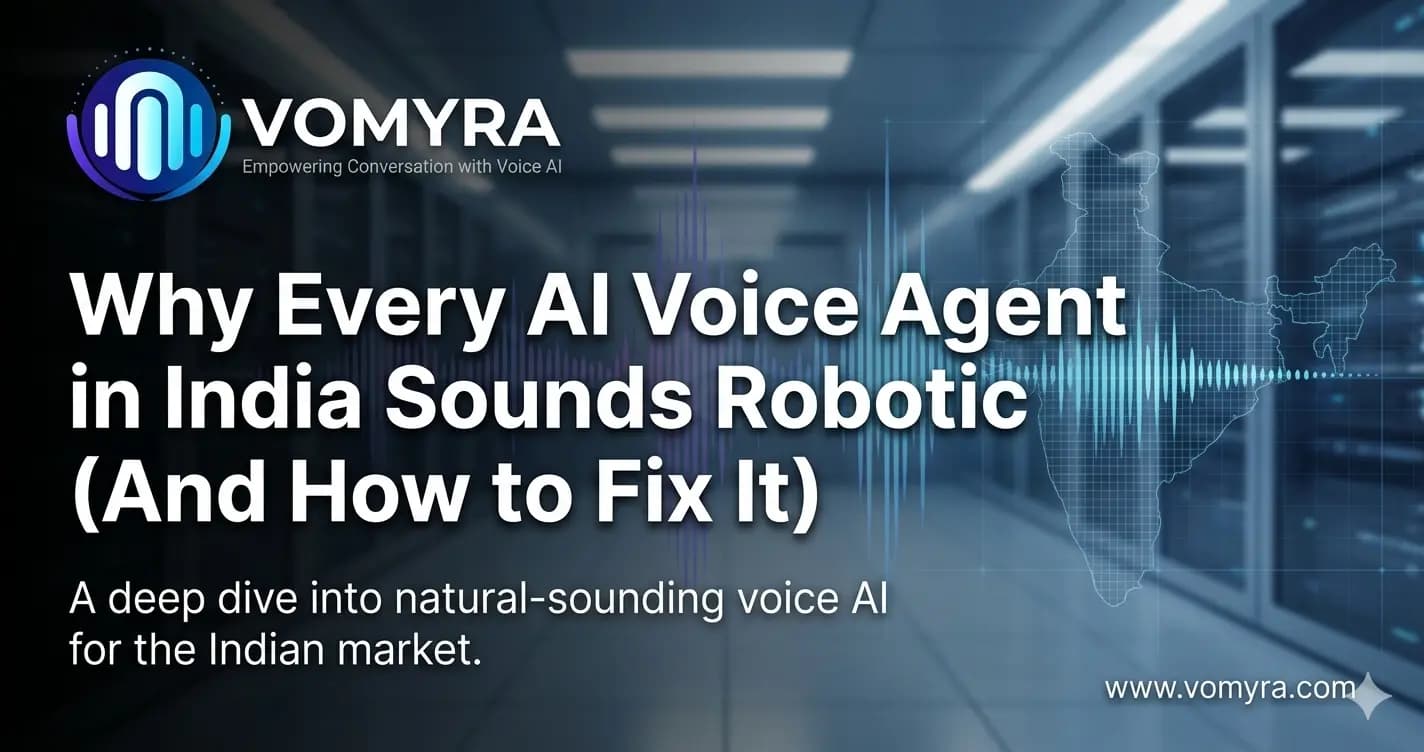
Why Every AI Voice Agent in India Sounds Robotic (And How to Fix It)
You’ve probably experienced it.
You call a business.
A voice answers.
Within three seconds, you know it’s AI.
Not because someone told you.
Not because the voice introduced itself as an AI assistant.
You just know.
The pauses feel strange.
The tone sounds flat.
Every sentence has the same rhythm.
And somehow, even before the conversation starts properly, the interaction feels less human.
This raises an important question.
Why AI voice agent sounds robotic, especially when AI technology seems to be improving every month?
The answer is actually simpler than most people think.
The problem usually isn’t the AI itself.
The problem is the voice.
Why Do People Notice a Robotic Voice So Quickly?
Human beings are surprisingly good at recognizing speech patterns.
We notice tiny things without even thinking about them.
Things like:
- Changes in tone
- Breathing patterns
- Speech rhythm
- Emotional emphasis
- Natural pauses
- Excitement
- Curiosity
- Confidence
When these elements are missing, the brain immediately recognizes that something feels artificial.
The conversation may still work.
The information may be accurate.
Yet the experience feels mechanical.
And customers notice.
What Makes an AI Voice Sound Robotic?
Several factors contribute to the problem.
Some are technical.
Others are surprisingly simple.
Generic Text-to-Speech Voices
This is probably the biggest reason.
Many businesses use the same pre-built text-to-speech voices available on popular platforms.
The result?
Hundreds or even thousands of companies end up sounding almost identical.
Customers hear:
- The same tone
- The same pacing
- The same pronunciation style
After a while, every AI voice starts blending together.
No Personality in the Voice
Think about people you know.
Everyone speaks differently.
Some people speak quickly.
Others slow down and emphasize words.
Some are energetic.
Others sound calm and thoughtful.
Many AI systems remove these natural differences.
The result is a voice that sounds technically correct but emotionally empty.
Unnatural Pauses
Humans don’t speak with perfect timing.
Sometimes we pause.
Sometimes we interrupt ourselves.
Sometimes we hesitate while searching for the right word.
AI voices often pause in places where a human never would.
This creates an awkward listening experience.
Monotone Delivery
Imagine listening to someone read every sentence with exactly the same energy level.
It would become exhausting.
Many AI voices still struggle with emotional variation.
Customers hear the same tone whether discussing:
- A hotel booking
- A restaurant reservation
- An insurance claim
- A property inquiry
Real conversations don’t work that way.
Scripted Conversations
Many AI systems rely heavily on predefined responses.
The voice may sound acceptable.
The conversation itself feels rigid.
Customers quickly sense that they are talking to software rather than engaging in a genuine conversation.
Why Does a Robotic Voice Matter?
Some business owners believe voice quality is a minor issue.
The AI answers questions.
The customer gets information.
Problem solved.
Not quite.
Voice quality directly influences trust.
Imagine calling:
- A hospital
- A luxury resort
- A financial advisor
- A real estate company
Now imagine the voice sounds cold and robotic.
Would it create confidence?
Probably not.
People naturally connect with voices that sound familiar and authentic.
How Robotic Voices Affect Customer Experience
A robotic voice can create several problems.
Lower Engagement
Customers may end calls sooner.
They may lose interest in the conversation.
Some callers immediately request a human representative.
Reduced Trust
Trust matters in industries such as:
- Healthcare
- Finance
- Hospitality
- Real estate
A robotic voice can create distance between the customer and the brand.
Lower Conversion Rates
Businesses spend money generating leads.
If prospects feel disconnected during the first conversation, conversion rates can suffer.
Poor Brand Identity
Many companies invest heavily in branding.
Their website looks unique.
Their advertisements look unique.
Then every customer hears the same generic AI voice.
The brand identity disappears.
Why Most AI Voice Agents in India Sound the Same
This is a surprisingly common problem.
Many providers rely on the same text-to-speech engines.
Businesses choose a voice from a dropdown menu.
The AI starts calling customers.
A restaurant in Mumbai.
A real estate company in Bengaluru.
An insurance agency in Delhi.
All using nearly identical voices.
The technology works.
The experience feels generic.
And customers notice.
What Is the Right Way to Fix This Problem?
The solution is not simply finding a “better” AI voice.
The solution is creating a voice that actually belongs to the business.
A voice customers recognize.
A voice customers trust.
A voice that reflects the personality of the company.
That is where custom voice AI becomes important.
Can Businesses Create AI Agents Using Their Own Voice?
Yes.
This is one of the biggest shifts happening in AI voice technology today.
Instead of selecting a generic voice, businesses can create AI agents based on a real human voice.
The difference is significant.
Customers hear a familiar voice rather than a standard synthetic voice.
The interaction feels more natural.
The brand becomes more memorable.
How Does Voice Cloning Improve Customer Experience?
Voice cloning allows AI systems to replicate the tone, rhythm, and speaking style of a real person.
Benefits include:
- Greater familiarity
- Better customer trust
- Stronger brand identity
- More natural conversations
- Improved customer engagement
For businesses that depend heavily on phone conversations, this can make a noticeable difference.
Vomyra’s Approach to AI Voice Agents
Many AI platforms still depend on generic text-to-speech systems.
Vomyra takes a different approach.
Vomyra is the only platform in India where you can build an AI agent in your own voice in just 10 seconds.
Instead of choosing from a list of standard voices, businesses can create an AI agent that sounds like them.
No generic TTS.
No robotic voice.
Customers hear you.
Not a bot.
This creates a much stronger connection between the business and the customer.
Whether it is a restaurant owner, hotel manager, doctor, consultant, or real estate advisor, callers hear a familiar and authentic voice.
Generic TTS vs Custom Voice AI
| Feature | Generic Text-to-Speech | Custom Voice AI |
| Voice Identity | Shared by many businesses | Unique to your business |
| Emotional Connection | Limited | Stronger |
| Brand Recognition | Low | High |
| Customer Trust | Moderate | Higher |
| Natural Speech Patterns | Limited | More human-like |
| Memorability | Generic | Distinctive |
Which Industries Benefit Most From Natural AI Voices?
Almost every industry can benefit.
Some sectors see particularly strong results.
Hospitality
Guests appreciate hearing a warm and welcoming voice.
Hotels, resorts, and restaurants rely heavily on customer interaction.
Real Estate
Property purchases involve trust.
A familiar voice can create a stronger first impression.
Healthcare
Patients often feel more comfortable speaking with a calm and natural voice.
Financial Services
Banks, insurance companies, and lending businesses depend on customer confidence.
Voice quality can influence that perception.
Education
Students and parents respond better to conversational interactions.
What Should Businesses Look for in an AI Voice Platform?
Before choosing a platform, businesses should evaluate several factors.
Natural Speech Quality
The voice should sound conversational.
Not mechanical.
Voice Ownership
Can the business create an AI using its own voice?
This is becoming increasingly important.
Multi-Language Support
India’s diverse market requires language flexibility.
Fast Deployment
Businesses should be able to launch AI agents quickly.
Human-Like Conversations
The AI should understand context and maintain natural dialogue.
Will Robotic AI Voices Disappear Completely?
Probably not.
There will always be businesses using basic voice systems.
Cost considerations alone will keep them in the market.
The broader trend is moving toward natural voice experiences.
Customers increasingly expect conversations that feel authentic.
As AI technology improves, generic robotic voices will become less common.
Businesses that adopt natural voice AI early may create a stronger customer experience than competitors still relying on standard text-to-speech systems.
Summary
If you have ever wondered why AI voice agent sounds robotic, the answer usually comes down to generic text-to-speech voices, flat delivery, unnatural pauses, and a lack of personality. Customers notice these issues immediately, which can affect trust and engagement. The solution is moving beyond standard AI voices and adopting custom voice technology. Platforms like Vomyra allow businesses to create AI agents using their own voice, helping customers hear a familiar and authentic voice rather than a generic bot.
Frequently Asked Questions (FAQs)
Why does an AI voice sound robotic?
AI voices often sound robotic because of generic text-to-speech systems, monotone delivery, unnatural pauses, and limited emotional variation.
Can AI voices sound human?
Yes. Modern voice cloning and conversational AI technologies can create much more natural-sounding interactions.
Why do customers dislike robotic AI voices?
Robotic voices can reduce trust, create weaker engagement, and make conversations feel less authentic.
What is voice cloning?
Voice cloning is a technology that allows AI systems to replicate a real person’s voice, including tone and speaking style.
Can businesses create AI agents using their own voice?
Yes. Some platforms allow businesses to build AI agents based on their own voice rather than using standard text-to-speech options.
What makes Vomyra different?
Vomyra allows businesses to create an AI agent in their own voice in about 10 seconds, helping customers hear a familiar voice instead of a generic AI-generated voice.