B2B sales often involve multiple conversations before a business makes a purchase decision. Sales teams need to contact potential clients, understand their requirements, schedule meetings and follow up regularly. Managing these activities manually can take considerable time, especially when businesses receive enquiries from different channels.
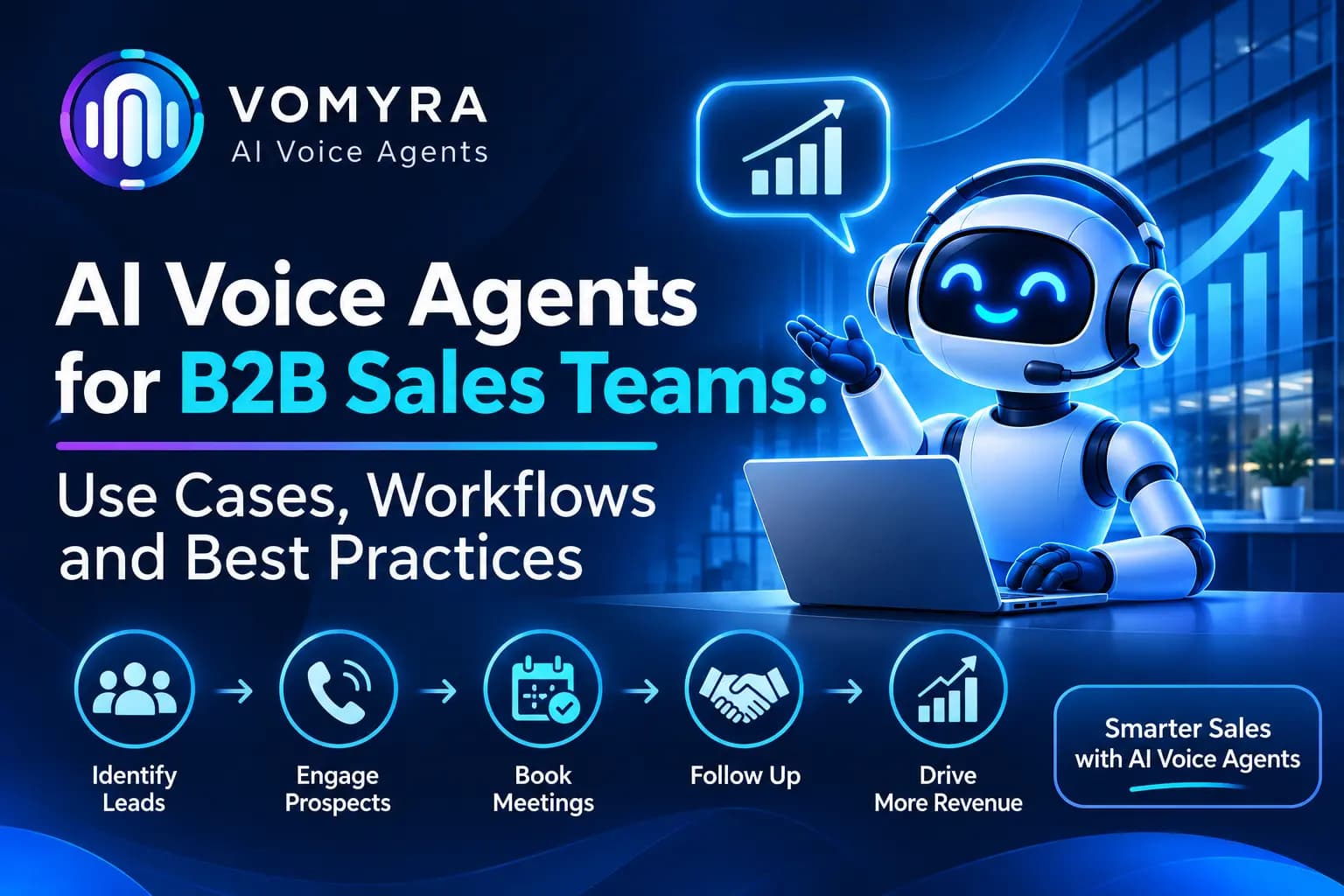
An AI voice agent for B2B sales can help automate repetitive calling tasks while allowing sales representatives to focus on important discussions and relationship building. It can make outbound calls, ask qualification questions, schedule meetings and update customer records through connected systems.
This guide explains how AI voice agents work in B2B sales, their practical use cases, common workflows and best practices for implementation.
What Are AI Voice Agents for B2B Sales?
AI voice agents are conversational systems that use artificial intelligence to communicate with people through phone calls. They can understand spoken responses, answer relevant questions and follow predefined business instructions.
In B2B sales, these agents can support activities such as lead qualification, initial outreach, appointment scheduling and follow-up calls.
For example, when a company submits an enquiry about business software, an AI voice agent can contact the prospect, ask about company size and requirements, and record the responses. If the prospect shows interest, the system can arrange a meeting with a sales representative.
Unlike basic automated calling systems, conversational AI voice agents can respond according to the context of a discussion rather than following only fixed keypad-based menus.
How AI Voice Agents Work in B2B Sales Workflows
An AI voice agent usually works with a CRM, lead management system and telephony platform. These integrations help move information between sales tools and calling workflows.
1. Lead Collection
Potential business customers may come through website forms, Google Ads, LinkedIn campaigns, webinars or other marketing channels. Their contact details and enquiry information are stored in a connected CRM or application.
2. Lead Assignment and Calling
When a new lead meets the configured conditions, the system can trigger an outbound call. The AI voice agent introduces the business and confirms the reason for contacting the prospect.
3. Requirement Discovery
The agent asks relevant questions about the prospect’s business, challenges, budget, expected timeline or service requirements.
4. Lead Qualification
Based on the conversation, the system records responses and categorises the lead according to business-defined qualification rules.
5. CRM Updates and Sales Handover
Call summaries, customer responses and follow-up requirements can be saved in the CRM. Qualified prospects can then be assigned to sales representatives for detailed discussions.
Key Use Cases of AI Voice Agents in B2B Sales
1. Automated Lead Qualification
B2B sales teams often receive enquiries from companies with different requirements and purchase intentions. An AI voice agent can ask predefined questions to understand whether a prospect matches the target customer profile.
It can collect details such as company size, industry, business requirements and purchasing timeline. Sales representatives can use this information to prioritise relevant opportunities.
2. Outbound Sales Calling
AI voice agents can support initial outreach to prospects who have shown interest in a product or service. They can introduce the business, explain the purpose of the call and identify whether the prospect is open to a further discussion.
For complex sales conversations, interested prospects can be transferred to human sales representatives.
3. Appointment and Demo Scheduling
Arranging meetings with business prospects often requires multiple calls and messages. An AI voice agent connected to a scheduling application can collect preferred meeting times and check available slots.
This is useful for companies offering software demonstrations, business consultations and product presentations.
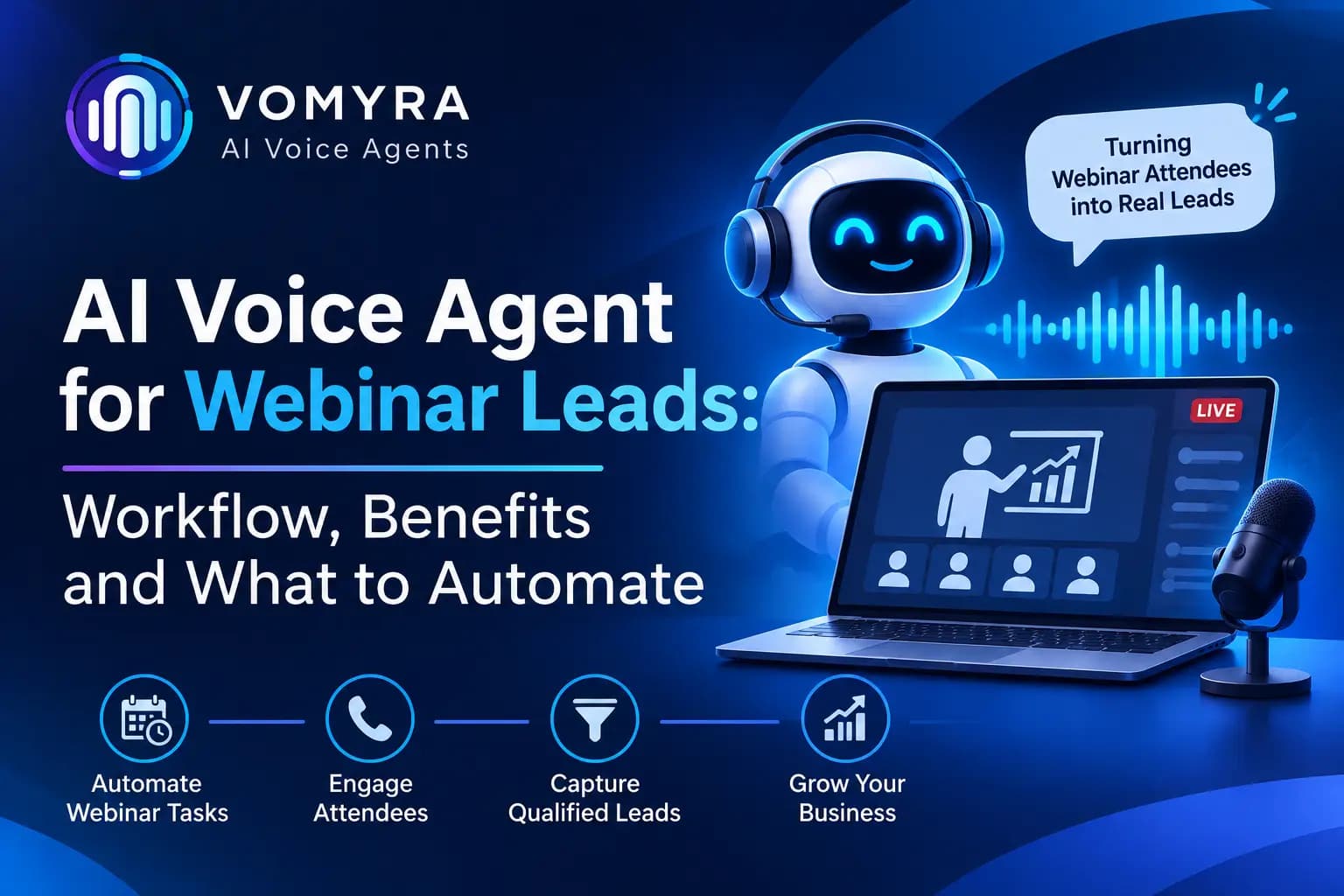
4. Webinar and Event Lead Follow-Ups
Businesses generate B2B leads through webinars, conferences and online events. However, not every attendee becomes an active sales opportunity.
AI voice agents can contact attendees, ask about their interest in the discussed solution and identify prospects who want a product demo or consultation.
5. Follow-Ups with Existing Prospects
B2B sales cycles may continue for weeks or months. An AI calling workflow can support scheduled follow-ups with prospects who requested more information or asked to be contacted later.
The agent can check whether their requirements have changed and record the next action for the sales team.
6. CRM Data Collection
Sales representatives spend time updating contact records after calls. With suitable CRM integration, AI voice agents can automatically save conversation summaries, qualification responses and call outcomes.
This helps maintain organised sales records and reduces manual data entry.
Benefits of AI Voice Agents for B2B Sales Teams
Faster Lead Response
Automated calling workflows can contact new enquiries without waiting for a sales representative to become available. This helps businesses reduce delays in their initial response.
More Consistent Lead Qualification
AI voice agents can follow standard qualification questions across conversations. This makes it easier to collect comparable information from different prospects.
Reduced Repetitive Work
Sales teams can spend less time on basic introductory calls, routine follow-ups and manual record updates.
Better Sales Team Productivity
When routine tasks are automated, sales representatives can focus more on product demonstrations, negotiations and relationship building.
Improved Lead Visibility
CRM integration helps businesses track call outcomes, prospect requirements and follow-up activities in one place.
Read Also: 7 Ways AI Voice Agents Are Changing Sales Teams in India Right Now
How to Implement AI Voice Agents in a B2B Sales Process
Step 1: Identify Tasks to Automate
Start by selecting repetitive activities such as new lead calls, qualification questions, meeting scheduling or follow-ups. Avoid automating every stage of the sales process.
Step 2: Connect Your CRM and Lead Sources
Integrate the AI voice agent platform with your CRM, website forms or other lead sources. Webhooks, APIs and supported integration tools can transfer lead information between systems.
Step 3: Create a Conversation Workflow
Prepare the introduction, qualification questions, expected responses and next actions. Keep the conversation relevant to the product or service being offered.
Step 4: Configure Calling and CRM Actions
Set up outbound calling, call transfer conditions, meeting scheduling and CRM updates. Make sure the system records useful information after each conversation.
Step 5: Test Before Deployment
Run test calls to check response quality, call transfers, data accuracy and error handling. Review conversations to identify areas that need improvement.
Best Practices for Using AI Voice Agents in B2B Sales

Keep conversations relevant: Use business-specific questions instead of generic sales scripts. The agent should understand the purpose of the call.
Define clear qualification criteria: Decide which responses indicate a qualified lead and when a prospect should be transferred to a sales representative.
Maintain human involvement: AI voice agents should support sales teams, not replace human judgement in complex negotiations or high-value discussions.
Protect customer information: Secure CRM connections, API credentials and call records. Collect only the information required for the sales process.
Respect calling preferences: Follow applicable telemarketing, consent, privacy and do-not-call requirements. Honour requests to stop receiving calls.
Track performance: Monitor contact rates, qualified leads, scheduled meetings, successful handovers and conversion rates. Use these results to improve calling workflows.
How Vomyra Supports B2B Sales Automation
Vomyra provides an AI voice agent platform that helps businesses automate customer conversations and calling workflows. B2B companies can use connected voice automation to manage initial lead calls, qualify prospects, schedule appointments and follow up with potential customers.
By connecting voice workflows with suitable CRM and business applications, teams can record customer requirements, maintain conversation history and pass relevant information to sales representatives.
The exact automation setup depends on the business process, available integrations and calling requirements.
Conclusion
AI voice agents can make B2B sales processes more organised by automating repetitive calling activities and improving the way businesses manage prospect information. From lead qualification and outbound calling to appointment scheduling and CRM updates, they can support several stages of the sales journey.
The best results come from using AI voice agents for clearly defined tasks while keeping sales representatives involved in important customer conversations. With suitable integrations, well-designed workflows and regular performance monitoring, businesses can build a more efficient B2B sales process.
Frequently Asked Questions
1. How are AI voice agents used in B2B sales?
AI voice agents are used for lead qualification, outbound calling, appointment scheduling, webinar follow-ups and routine prospect communication.
2. Can AI voice agents qualify B2B leads?
Yes. They can ask questions about company size, industry, budget, business challenges and purchase timelines to collect information based on predefined qualification criteria.
3. Can AI voice agents integrate with a B2B CRM?
Yes. Through supported APIs or integrations, AI voice agents can access relevant lead information and save call summaries, customer responses and lead status updates.
4. Can AI voice agents schedule sales meetings?
Yes. When connected to a scheduling application, they can check available time slots, collect meeting preferences and help arrange product demos or consultations.
5. Do AI voice agents replace B2B sales representatives?
No. They are better suited to repetitive tasks and initial conversations. Human sales representatives remain important for negotiations, complex requirements and building long-term business relationships.