Hospitality runs on phone calls in a way few other industries do. Guests call to check availability, ask about amenities, confirm bookings, request late checkouts, and raise issues during their stay – often at the exact moment a front desk is busiest.
A missed reservation call is a lost booking. A slow response to a guest query during a stay is a dented experience. And most hotels, resorts and hospitality groups don’t have the staff to answer every call instantly, especially outside peak hours or during high season.
AI voice agents are increasingly used to close this gap – answering reservation calls the moment they come in, handling routine guest queries, and keeping front-desk and reservations teams focused on guests who are actually in front of them.
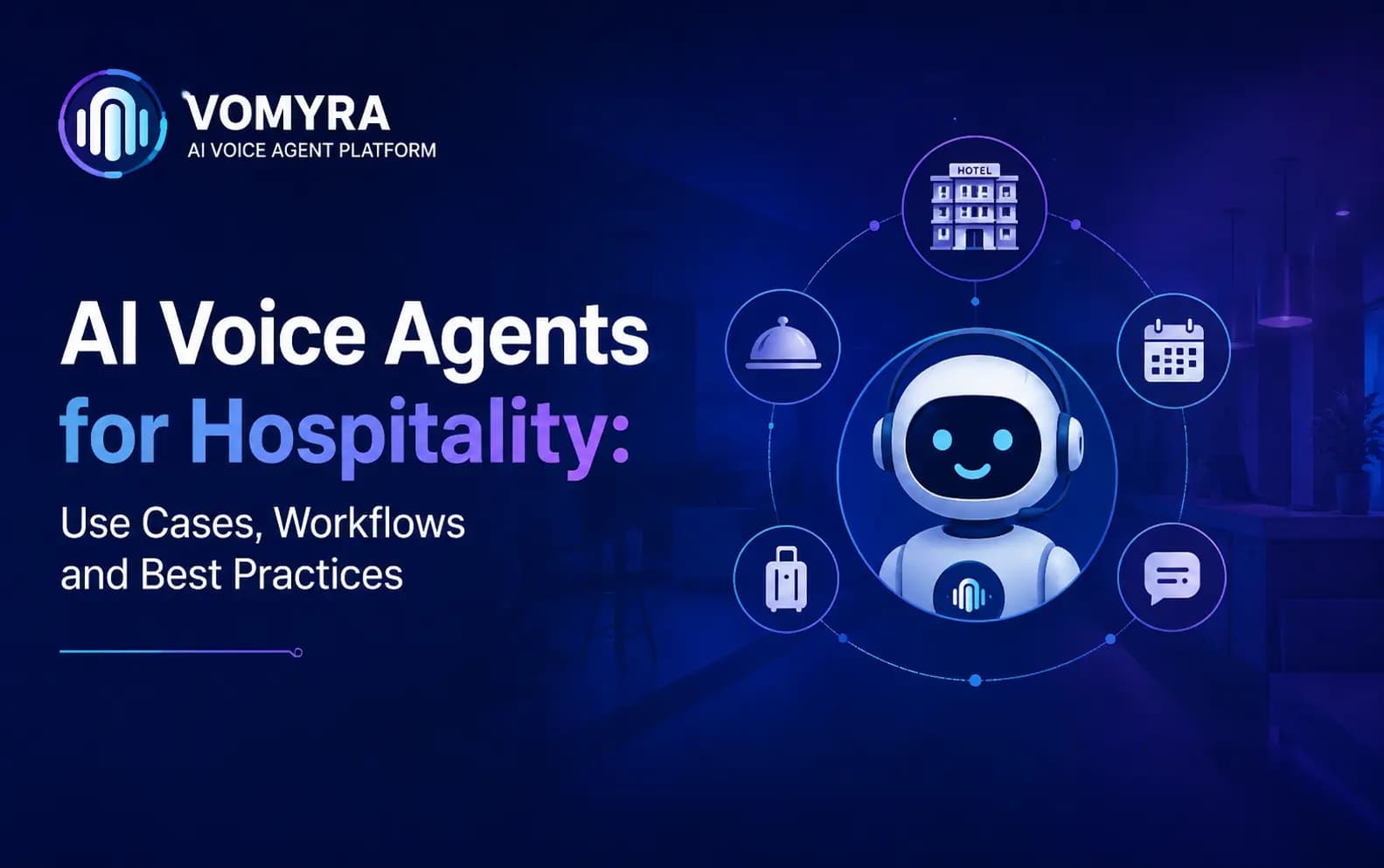
This guide covers where AI voice agents fit into hospitality, key use cases, a practical workflow, and best practices for getting the experience right.
Why Hospitality Is a Strong Fit for AI Voice Agents
A few characteristics of hospitality communication make voice AI particularly effective here:
- High call volume around a narrow set of tasks. Reservations, availability checks and basic guest queries make up a large share of calls.
- Revenue tied directly to call response speed. A reservation enquiry that isn’t answered quickly often becomes a booking made elsewhere.
- Uneven demand across the day and season. Call volume spikes around holidays, weekends and peak season, well beyond normal staffing levels.
- Guests calling from different time zones. International guests often call outside local business hours, when front-desk teams are stretched thin or unavailable.
These conditions make hospitality one of the more commercially direct use cases for AI voice agents – every unanswered reservation call is a measurable, trackable loss.
Key Use Cases for AI Voice Agents in Hospitality
1. Reservation Enquiries and Bookings
An AI voice agent can answer availability questions, quote rates for different room types and dates, and complete a booking directly over the call – without the guest waiting on hold or being asked to call back.
2. Booking Confirmations and Modifications
Guests changing dates, requesting a different room type, or confirming details of an existing booking can be handled conversationally, with updates synced directly to the property’s booking system.
3. Pre-Arrival Information Calls
Ahead of a guest’s stay, an AI voice agent can call to confirm arrival time, share check-in details, and answer common pre-arrival questions – parking, amenities, nearby transport – reducing front-desk load at check-in.
4. In-Stay Guest Requests
For routine requests during a stay – extra towels, late checkout, room service timing – an AI voice agent can log and route the request to the right department instantly, rather than a guest waiting on hold or a request getting lost in a shift handover.
5. FAQ and Amenity Queries
Common questions about check-in and checkout times, amenities, dining options, or local recommendations can be answered directly by the agent, freeing front-desk staff for guests who are physically present.
6. Post-Stay Follow-Up and Feedback
After checkout, an AI voice agent can call to thank the guest, gather quick feedback, and flag any concerns for the property to address – building a feedback loop that most hospitality businesses don’t have the staff time to run consistently.
7. Group and Event Enquiries
Initial enquiries for group bookings, weddings or corporate events can be qualified by an AI voice agent – dates, guest count, budget range – before handing off a well-qualified lead to the sales or events team.
A Practical AI Voice Agent Workflow for Hospitality
- Call trigger – A guest calls in with an enquiry, or the property’s system flags an outbound need (pre-arrival call, post-stay follow-up).
- Intent understanding – The AI voice agent identifies whether the call is a new booking, a modification, an in-stay request, or a general query.
- System lookup – The agent checks live availability, rates, or existing booking details from the property management system.
- Resolution – Bookings are completed, changes are made, or questions are answered directly on the call.
- Escalation where needed – Complex requests, complaints, or anything requiring judgement are routed to the right human team, with context passed along.
- System update – Bookings, requests and notes are updated directly in the property management or CRM system.
- Follow-up – Pre-arrival confirmations and post-stay feedback calls are scheduled automatically around the guest’s stay dates.
The consistent principle: routine, high-volume tasks are handled directly by the agent, while anything guest-sensitive or judgement-based is handed to staff with full context.
Manual Front-Desk Calling vs AI Voice Agent Calling in Hospitality
| Factor | Manual Front-Desk/Reservations | AI Voice Agent |
| Reservation call answer rate | Missed calls during peak or off-hours | Every call answered instantly |
| Availability | Limited to staffed hours | 24/7, across time zones |
| Booking conversion speed | Depends on staff availability | Immediate, on the first call |
| In-stay request handling | Can be delayed during busy periods | Logged and routed instantly |
| Pre-arrival and follow-up calls | Rarely run consistently | Automated for every guest |
| Cost during peak season | Requires temporary or overtime staff | Scales instantly, no extra hiring |
| Language coverage | Limited to staff’s languages | Multiple languages, including regional Indian languages |
| Guest data capture | Manual notes, often incomplete | Full transcripts and structured records |
Read Also: AI Receptionist for Resorts: Hindi & Tamil Support

Key Benefits of AI Voice Agents for Hospitality
Fewer missed reservations Every call is answered instantly, so enquiries don’t go to a competitor simply because no one picked up.
Consistent guest experience across peak periods Call quality and response speed stay the same whether it’s a quiet Tuesday or the busiest weekend of the season.
Lower operational cost during demand spikes High season and holiday call volume is absorbed without temporary hiring or overtime costs.
Front-desk staff focus on guests on-site Routine phone enquiries no longer pull staff attention away from guests standing in front of them.
Better guest data and feedback loops Every call is transcribed and logged, giving hospitality teams visibility into common questions, complaints and booking patterns.
Multilingual guest coverage Guests can be served in their preferred language, improving the experience for both domestic and international travellers.
Best Practices for Deploying AI Voice Agents in Hospitality
Start with reservation calls This is typically the highest-impact, most measurable starting point – every answered reservation call has a direct, trackable revenue outcome.
Keep in-stay escalation fast and clear Guest requests during a stay need quick human follow-through. The agent’s job is to log and route accurately, not to delay resolution.
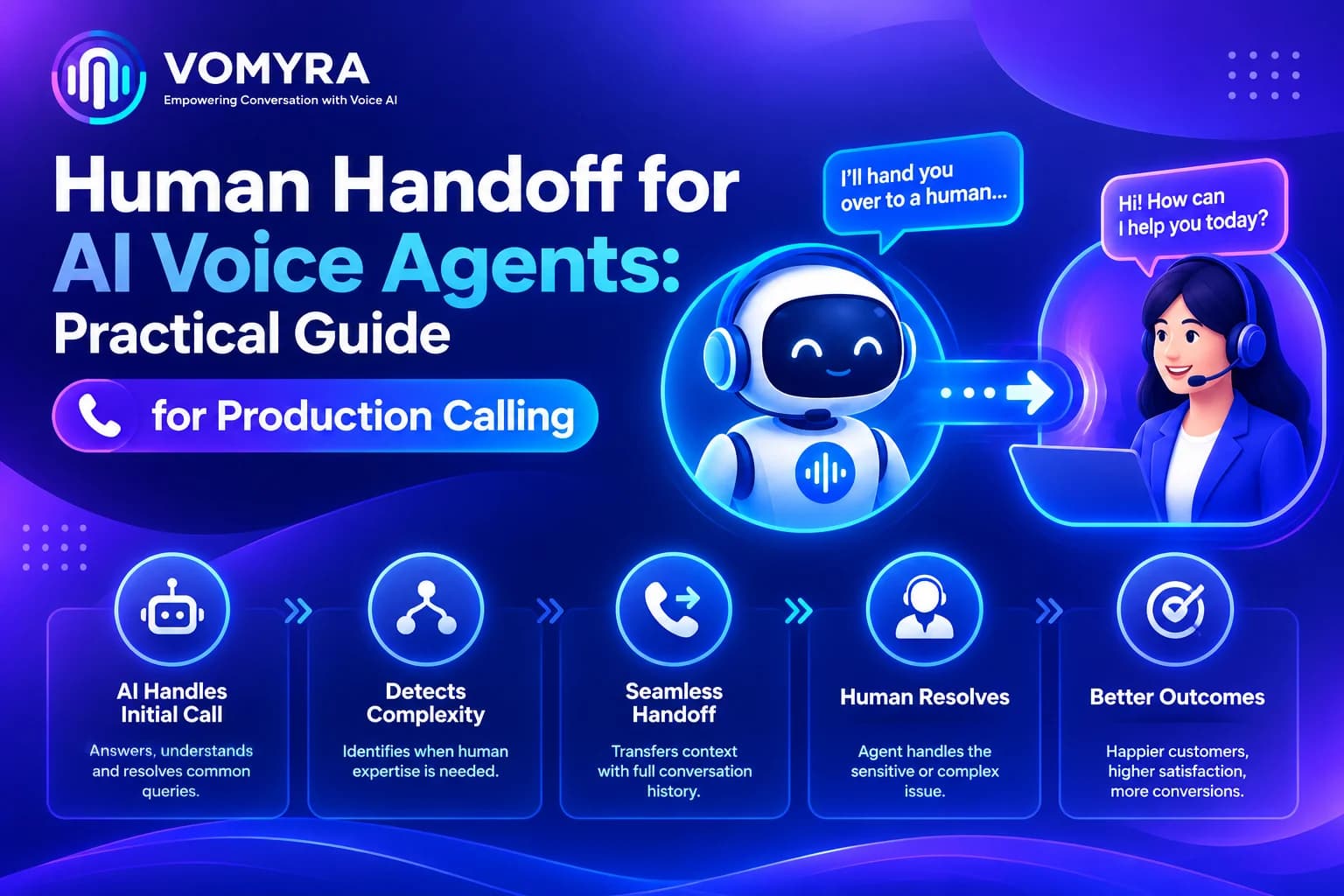
Make the human handoff seamless Guests should never have to repeat themselves after being transferred. Full context – what was discussed, what’s needed – should travel with the handoff.
Personalise pre-arrival and follow-up calls Use guest and booking details to make these calls feel considered rather than generic – mentioning the specific stay dates, room type, or prior visit history where relevant.
Match language to your guest base Properties with significant domestic or international guest mix benefit from agents that can converse naturally in the languages those guests actually use.
Monitor call outcomes, not just call volume Track booking conversion rates, resolution rates and guest feedback from AI-handled calls, not just how many calls were answered.
Build an AI Team for Your Hospitality Business
Every unanswered reservation call is a guest who may book elsewhere. Every delayed in-stay request is a small dent in an otherwise good experience. Most hospitality teams don’t lack the desire to fix this – they lack the staff hours to cover it consistently.
Vomyra is India’s Agentic Voice AI Platform, built to give hospitality businesses a complete AI voice team – handling reservations, guest queries, pre-arrival confirmations and post-stay follow-ups around the clock. Vomyra AI voice agents use real Indian mobile numbers and hold human-like conversations in multiple languages, so guests get a natural experience whether they’re booking a stay or requesting something during one.
If you’re evaluating how to stop losing reservation calls and free up front-desk capacity during peak periods, Vomyra is built specifically for this – with unlimited calling plans and no coding required to get started.
FAQs
Can an AI voice agent handle real-time rate and availability changes?
Yes, provided it’s connected to the property management or booking system, so quoted rates and availability reflect live data rather than static information.
Will this work for independent hotels, not just large chains?
Yes. Since these platforms don’t require coding to set up, independent properties can deploy an AI voice agent configured around their own booking system, rates and amenities.
What happens with guest complaints or sensitive issues?
These should be escalated to a human team member by design, with the agent passing along full context so the guest doesn’t have to repeat their concern.
Can an AI voice agent handle group booking and event enquiries?
Yes, for initial qualification – gathering dates, guest counts and budget range – before handing off a well-qualified enquiry to the sales or events team for detailed planning.