An AI voice agent can have excellent conversation quality, low latency, and a natural-sounding voice – and still underperform badly in production if the number it’s calling from doesn’t get picked up. The phone number an AI voice agent uses to make outbound calls, and the number it’s reachable on for inbound calls, has a direct, measurable effect on whether conversations happen at all.
Mobile virtual numbers are the mechanism that lets a voice AI platform place calls that look and behave like calls from a real local mobile number, rather than a generic or unfamiliar one. In markets where mobile-first communication is the norm, this single factor can meaningfully change how many calls actually connect.
This guide covers what mobile virtual numbers are, why they matter for AI voice agent performance, and what to evaluate before relying on them for production calling.
What Are Mobile Virtual Numbers?
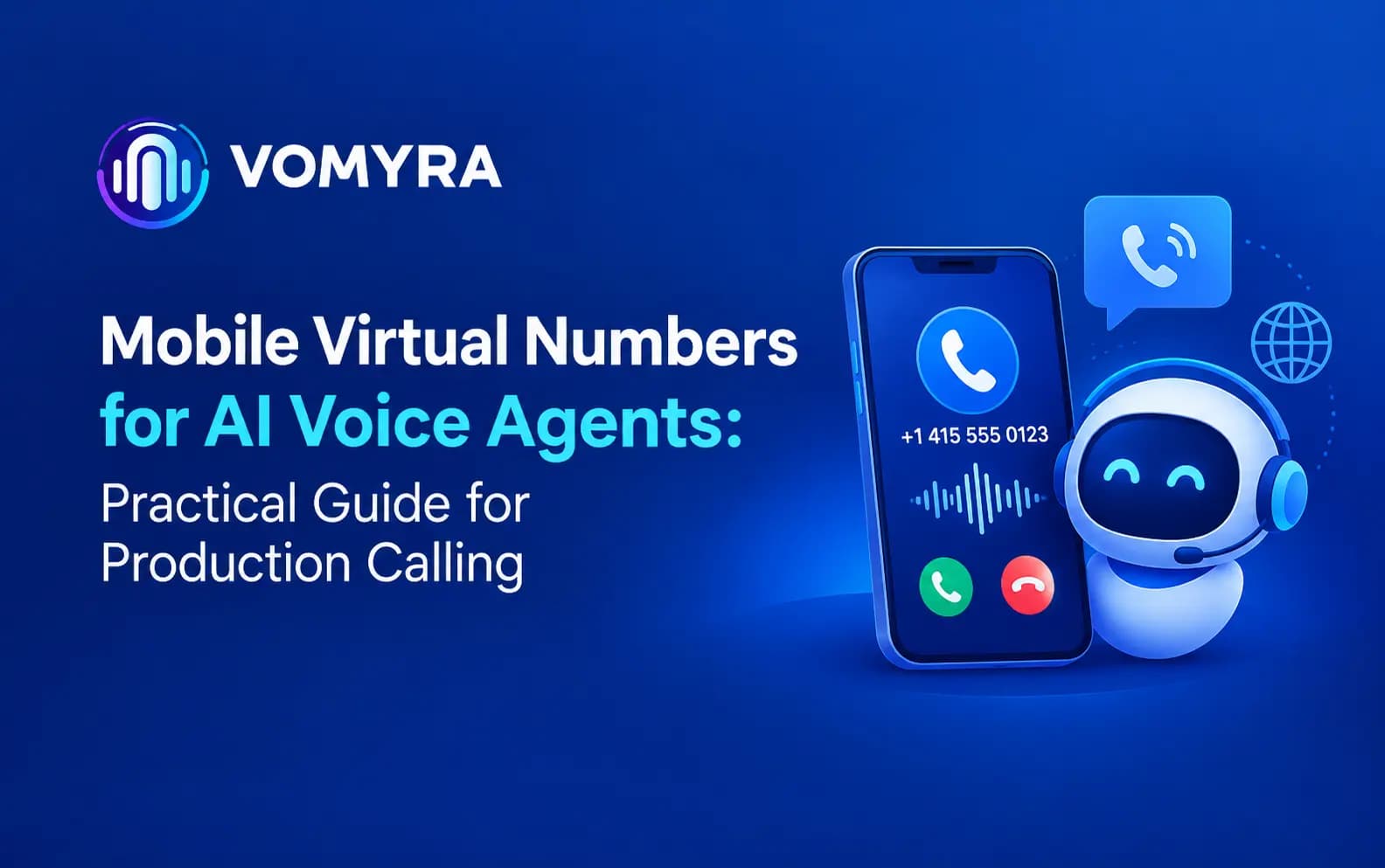
A mobile virtual number is a phone number that functions like a standard local mobile number – capable of placing and receiving calls, displaying a familiar local caller ID – but is provisioned and managed through cloud telephony infrastructure rather than a physical SIM card tied to a handset.
For an AI voice agent, this means outbound calls can display a recognisable local mobile number to the person receiving the call, and inbound numbers can be set up to route directly into the voice AI system, without needing physical phone hardware for every number in use.
This is different from generic VoIP numbers or numbers that display as unfamiliar, non-local formats – a distinction that matters more than it might seem for call answer rates.
Why the Type of Number Matters for AI Voice Agent Performance
Pickup Rates
People are generally more likely to answer a call from a number that looks like a local mobile number than one that appears as an unfamiliar international format, a landline-style number, or a number previously associated with spam. This is especially pronounced in markets where mobile-first communication dominates, including India, where recognisable local mobile number formats tend to see meaningfully better pickup behaviour than generic alternatives.
Caller Trust
A local mobile number carries an implicit signal of legitimacy that an unfamiliar or clearly non-local number doesn’t. For outbound use cases like sales outreach, appointment reminders, or collections calls, this trust signal affects not just whether the call is answered, but how the recipient engages once it is.
Number Reputation
Phone numbers, including virtual ones, can accumulate reputation over time based on call patterns and how recipients interact with them – including, in some cases, being flagged by carriers or spam-detection systems if used poorly. Managing number reputation is an ongoing consideration for any business making high-volume outbound calls, AI-driven or otherwise.
Two-Way Reachability
For use cases where a customer needs to call back – after a missed call, a reminder, or an inbound enquiry – the number needs to be genuinely reachable and routed correctly into the voice AI system, not a dead-end number that goes unanswered or mismatched to the wrong workflow.
Mobile Virtual Numbers vs Generic VoIP Numbers
| Factor | Local Mobile Virtual Numbers | Generic VoIP / International Numbers |
| Recipient pickup likelihood | Generally higher, especially in mobile-first markets | Often lower, less familiar caller ID |
| Perceived legitimacy | Higher, resembles a personal or business mobile number | Lower, can appear unfamiliar or suspicious |
| Local carrier routing | Typically stronger, better connectivity | Can vary, sometimes routed less efficiently |
| Spam flagging risk | Lower when managed well | Can be higher for generic or shared number pools |
| Two-way reachability | Full call-back capability | Depends on provider configuration |
| Regional appropriateness | Matches expected local calling patterns | Can feel out of place for local audiences |
Read Also: AI Voice Agents for Recruitment: Use Cases, Workflows and Best Practices
What to Evaluate When Choosing Numbers for a Voice AI Deployment
Local number availability for your target market Confirm the platform can provision numbers in the specific local formats relevant to where you’re calling – a local mobile number format matters more in some markets than others.
Number reputation management Ask how the platform monitors and manages number reputation over time, since poor call patterns can degrade pickup rates even for a well-provisioned number if left unmanaged.
Capacity for concurrent and high-volume calling For outbound campaigns calling many contacts simultaneously, confirm the numbering setup supports the required call volume without bottlenecking or triggering spam-detection thresholds.
Inbound routing and call-back handling If customers will call back a number the AI voice agent used, confirm that number is properly configured to route the returning call back into the right workflow, not a dead end.
Compliance with regional telecom regulations Number provisioning and outbound calling practices are subject to regional telecom and consumer protection regulations, which should be factored into how numbers are used and managed.
Common Symptoms of Number-Related Issues
| Symptom | Likely Cause |
| Low pickup rates despite good call timing | Number appears unfamiliar, international, or previously flagged |
| Declining pickup rates over an active campaign | Number reputation degrading from calling patterns |
| Customers report the number “looks like spam” | Number format or caller ID doesn’t match local expectations |
| Call-backs don’t reach the right workflow | Inbound routing misconfigured for that number |
| Inconsistent pickup rates across regions | Uneven local number coverage or carrier relationships by region |
This is a useful starting point for diagnosing pickup or connectivity issues that trace back to numbering rather than the AI conversation itself.

Numbers Built for Real Answer Rates, Not Just Connectivity
The phone number behind an AI voice agent is easy to overlook when evaluating conversation quality, but it directly affects whether the conversation happens at all. A well-engineered voice agent connected through the wrong kind of number still underperforms.
Vomyra is India’s Agentic Voice AI Platform, built with real Indian mobile numbers – 98 and 94 series – designed specifically for the pickup and trust behaviour of Indian callers, rather than generic or international number formats. Businesses can launch complete AI voice agents – Research, Outreach, Qualification, Closing and Follow-Up – calling from numbers built to actually get answered.
If you’re evaluating a voice AI platform for production calling in India, it’s worth checking how the numbers it uses perform against your own audience.
FAQs
Do mobile virtual numbers actually improve pickup rates measurably?
In mobile-first markets, recognisable local mobile number formats generally see better pickup behaviour than unfamiliar or generic number formats, though exact impact varies by audience, use case, and how well number reputation is managed over time.
Can one platform provide numbers across multiple regions?
This depends on the platform’s telecom provisioning and carrier relationships – worth confirming directly if calling across multiple states or regions with different local number expectations.
Does using a local number guarantee good pickup rates?
No single factor guarantees pickup rates – number type is one meaningful factor among others, including call timing, prior interaction history, and how well number reputation is managed over time.
Is number reputation something I need to actively manage?
Generally yes, especially for high-volume outbound calling – consistent, well-paced calling patterns and responsible use help maintain a number’s standing, while poor practices can degrade it over time.